
How to Buy Cryptocurrency via P2P on a Crypto Exchange
#guides
Introduction
Cryptocurrency can be purchased in many ways — on a spot exchange market, through a card gateway, from an exchange service, or directly from another person via P2P. The last method is the most interesting for beginners for several reasons. There are no intermediaries marking up their margin. You can pay the way you're used to — with a bank card, a mobile wallet transfer, or through a local payment system in your country. Most importantly, P2P platforms operate on major crypto exchanges and are therefore protected by the exchange's own security mechanisms — no shady "blind" deals with strangers.
In this article, we'll explain in plain language what a P2P purchase is, how it works on exchanges like Bybit, Bitget, MEXC, KuCoin, and BingX, and we'll walk through the process step by step — from registration to receiving crypto in your account balance. We'll also highlight the most common beginner mistakes and provide tips for buying safely.
What Is a P2P Cryptocurrency Purchase
P2P stands for peer-to-peer — "from person to person." In the context of crypto exchanges, it is a trading format where the buyer and seller directly agree on a deal between themselves. One person wants to buy USDT with their local currency, another is willing to sell USDT for that same currency — the exchange brings them together and ensures the security of the transaction.
The principle is simple. The seller places an advertisement on the exchange's P2P platform in advance — how much crypto they're willing to sell, at what price, and which payment methods they accept. The buyer opens the listings catalog, selects a suitable offer, and clicks "Buy." At that moment, the seller's cryptocurrency is automatically locked in a special exchange vault — this is called escrow. The buyer sees the seller's payment details (account number, wallet details, card number — whichever was selected in the listing), sends the money directly to the seller, then clicks "Paid" in the exchange interface. The seller verifies the receipt of funds and clicks "Release crypto." At that point, the escrow unfreezes the coins and they are credited to the buyer's account.
The money goes directly from buyer to seller — the exchange doesn't see or touch it. The cryptocurrency, however, remains in the exchange's escrow throughout the transaction, and the seller cannot withdraw it or transfer it to anyone else until the deal is complete. If a dispute arises — for example, the buyer claims to have paid but the seller doesn't confirm — both parties invoke the exchange's arbitration, and support reviews the evidence (receipts, transfer screenshots).
This is fundamentally safer than dealing through grey exchangers or with private individuals without an intermediary. The exchange acts as a guarantor, and deception in a P2P deal is much harder than in a direct transfer to a stranger.
Advantages of P2P Platforms
The P2P format has several advantages that have made it a popular channel for buying cryptocurrency.
Wide variety of payment methods. On the P2P platforms of major exchanges, dozens and even hundreds of payment options are available — bank cards, bank transfers, mobile wallets, local payment systems, and sometimes even cash at an in-person meeting. The buyer chooses what is convenient for them, not what the exchange imposes.
Protection. Cryptocurrency is locked at the exchange during the transaction, and the seller cannot "run off" with it. This eliminates the main risk of private deals — that you'll transfer money and receive nothing in return.
Transparent seller reputations. Each seller has a public history — number of completed deals, success rate, average response time, and reviews from other buyers. You can immediately see whether this is a reliable seller with a thousand successful deals or a newcomer with five transactions and an unclear reputation.
Availability in most countries. A P2P platform operates wherever the exchange itself operates, and doesn't depend on whether the exchange has agreements with local banks. If your bank isn't directly connected to the exchange's card gateway, you can still buy crypto via P2P — some seller is sure to accept payment through your bank.
Exchange support in case of problems. Unlike private exchangers, exchanges have a support service that handles disputes. If something goes wrong, you can open a ticket and receive a review of the situation based on evidence.
Step-by-Step Guide to Buying Cryptocurrency via P2P
Let's go through the purchase process step by step. Interfaces differ between exchanges in the details, but the logic is the same across all platforms. This article uses Bybit as an example.
Step 1. Register on a Crypto Exchange
Choose one of the major exchanges with a well-developed P2P platform — Bybit, Bitget, MEXC, KuCoin, or BingX. Open the official exchange website (carefully check the address in your browser — phishing sites with similar names are common) and click "Create Account" or "Sign Up."
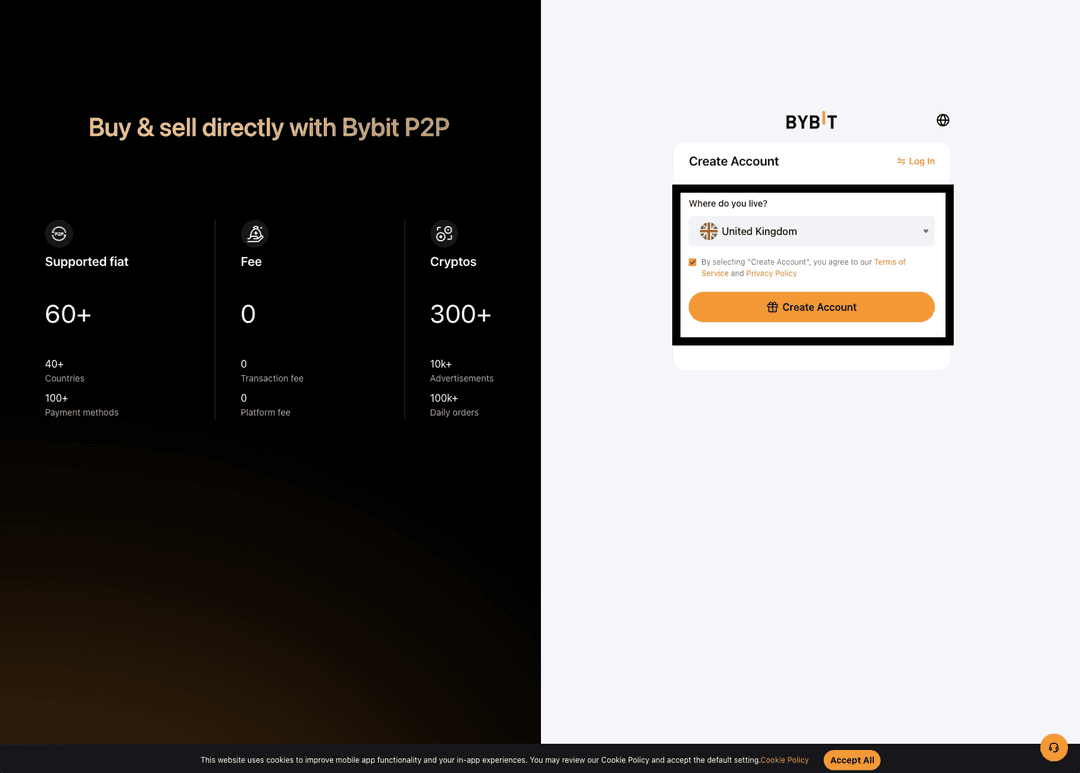
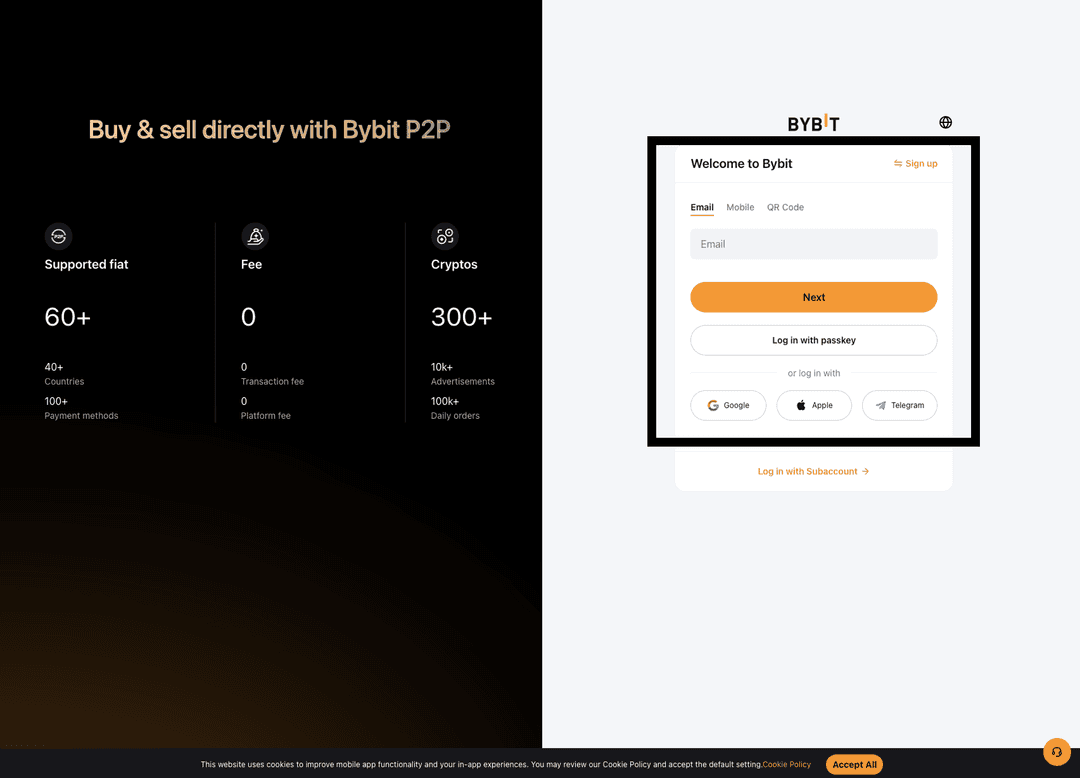
Select your country of residence, enter your email or phone number, create a strong password, and then confirm your registration via the code sent to the specified email or phone.
Step 2. Complete Identity Verification
Why this is necessary. First, it is a requirement of international anti-money laundering legislation — all legitimate crypto exchanges are required to perform KYC. Second, it protects you — in P2P, it's important for both the seller and the buyer to have verified identities, which makes fraud unlikely and provides a basis for dispute resolution. Third, the name on the bank account from which you transfer money must match the verified name on the exchange — this is a security rule that protects against schemes involving other people's accounts.
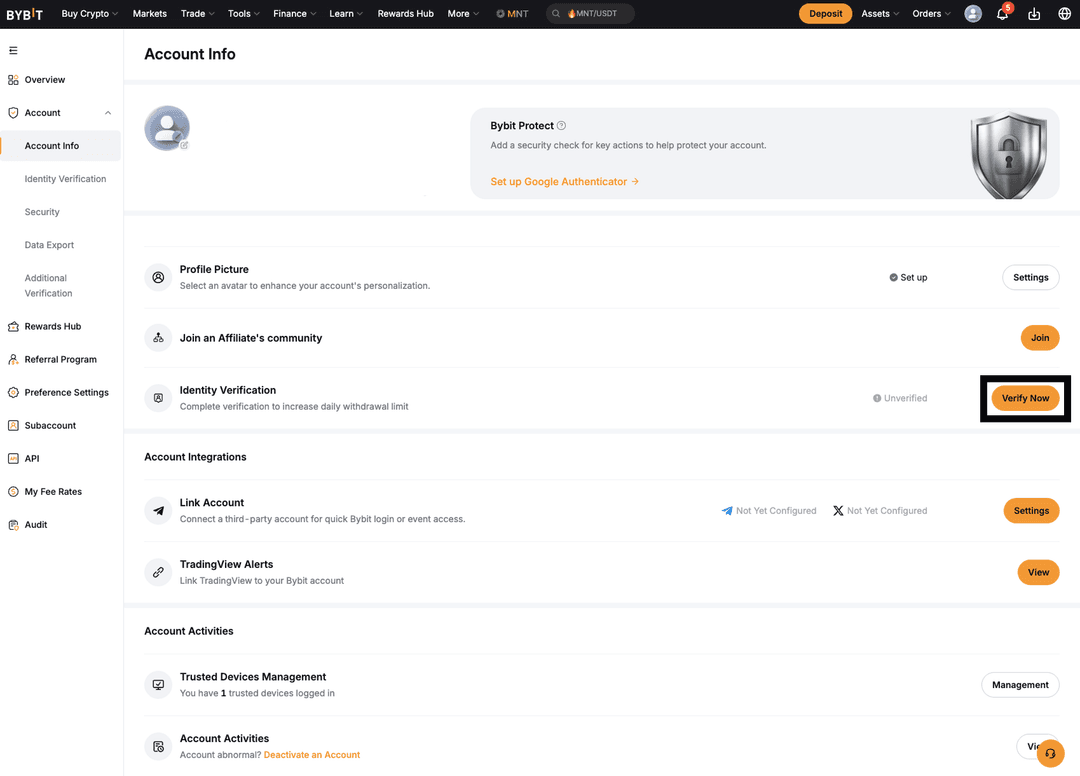
To complete verification, go to your exchange profile and click "Verify."
Choose a verification method. On Bybit, verification can be done using a passport, driver's license, identity card, or residence permit.
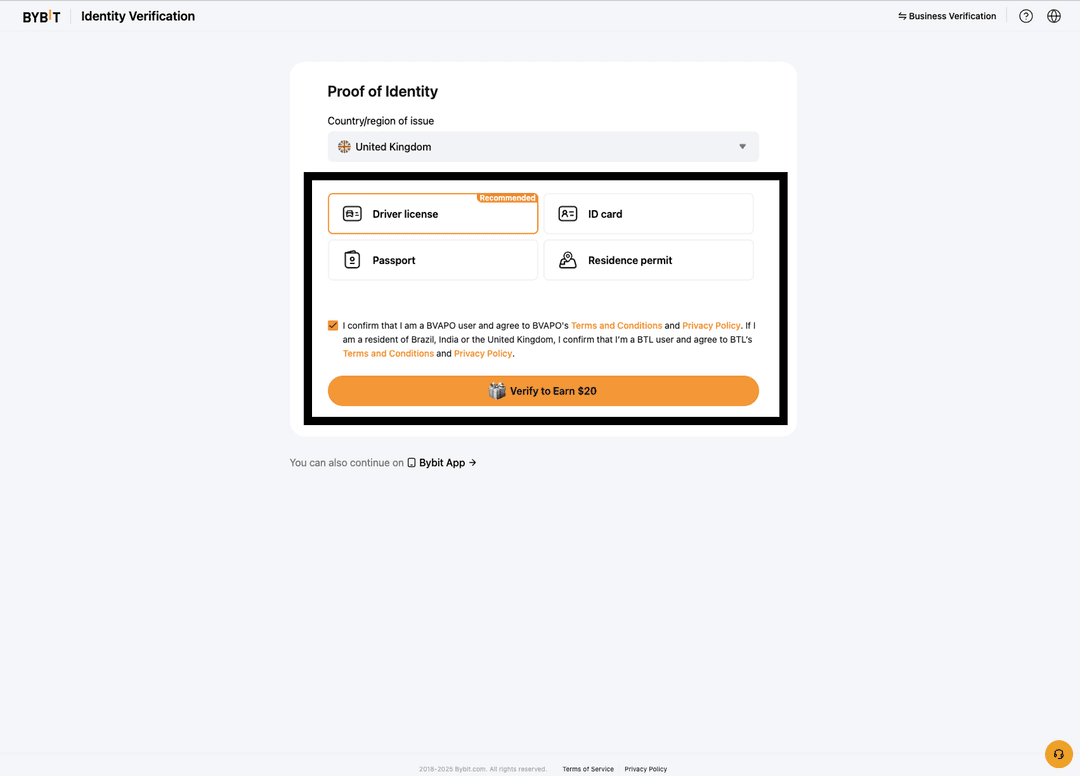
Verification typically takes anywhere from a few minutes to a couple of hours. Once approved, the P2P platform becomes accessible.
Step 3. Navigate to the P2P Section
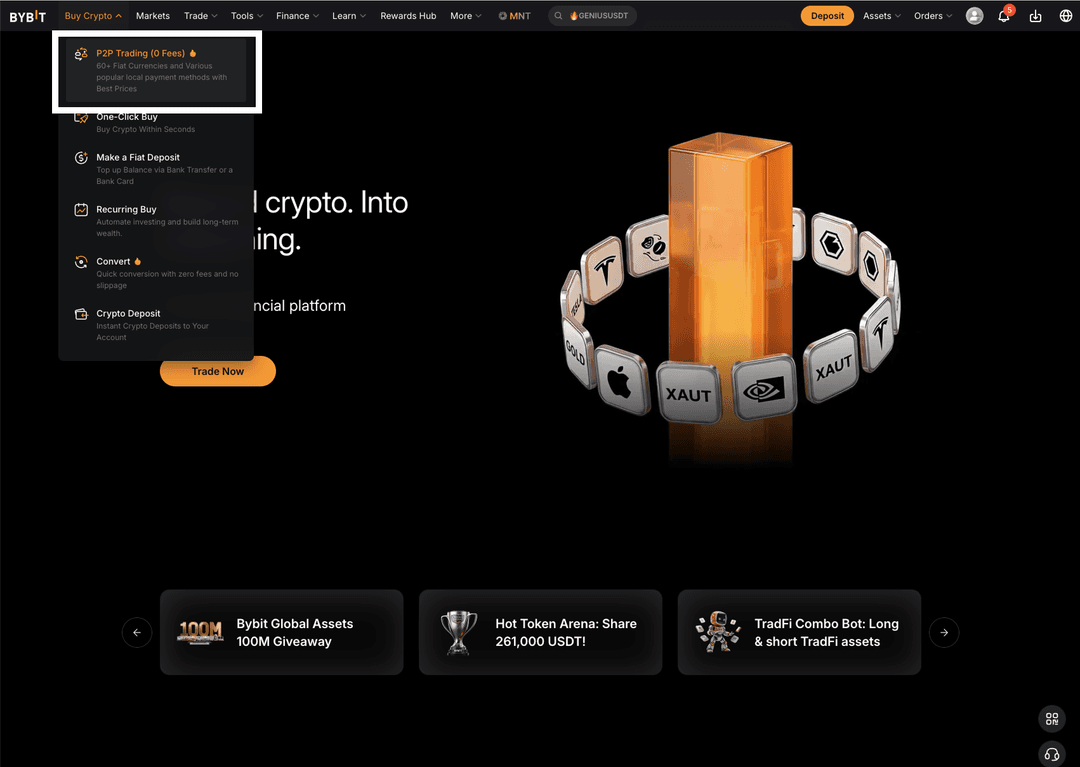
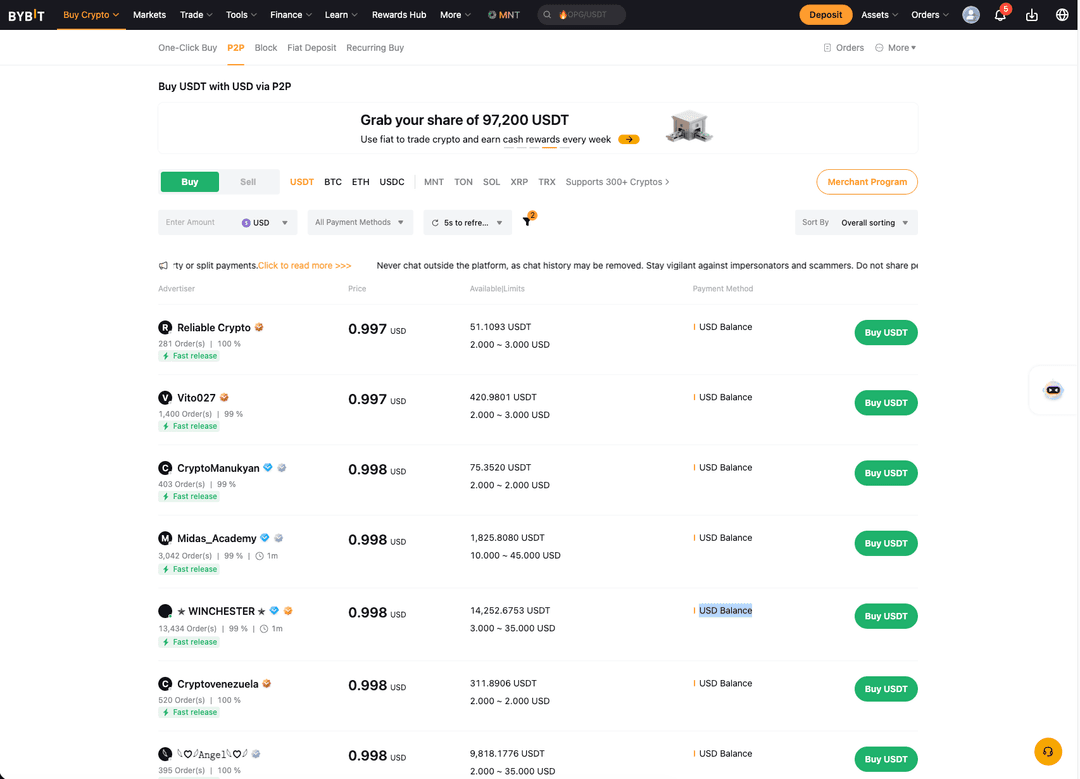
At the top, there are usually filters; below is a list of listings with sellers, prices, payment methods, and limits.
Step 4. Select a Cryptocurrency and Payment Method
At the top of the P2P page, several filtering options are available.
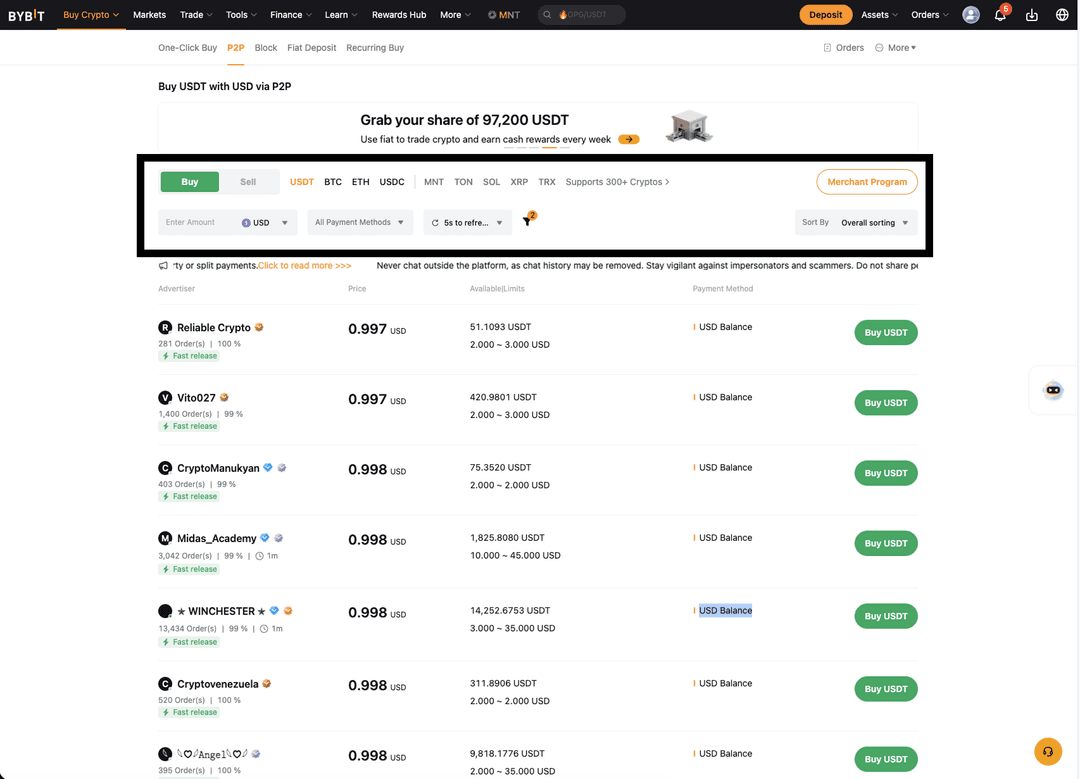
Coin selection. Most P2P platforms support the most popular cryptocurrencies — USDT, USDC, BTC, ETH. Some exchanges have a broader list of 7–10 coins. For beginners, it usually makes the most sense to start with USDT — it's a stablecoin pegged to the dollar, and its price doesn't fluctuate like Bitcoin or Ether.
Payment method selection. Available options depend on the currency and region — bank transfers, cards, mobile wallets, local payment systems. Choose the method that is convenient for you and that you know works on your end.
After setting the filters, the catalog will show only the listings suitable for you.
Step 5. Choose a Seller
In the list, you'll see several sellers with different prices, limits, and characteristics.
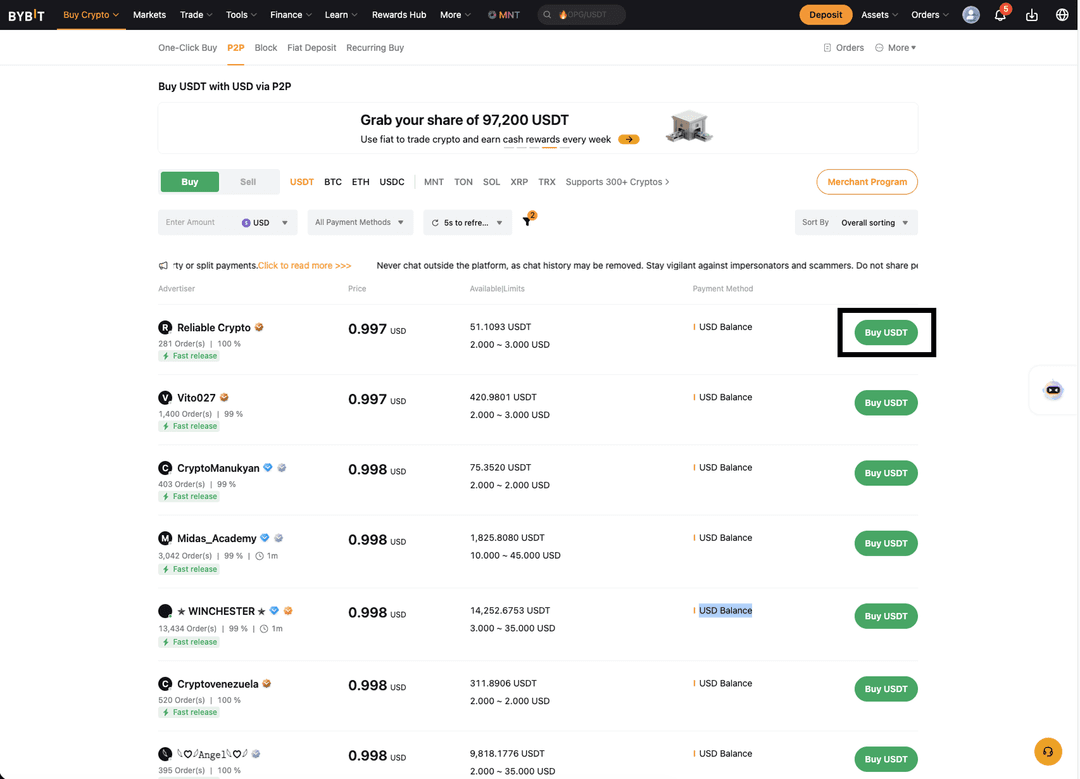
What to look at when choosing a seller.
Number of completed deals. The more, the more reliably the seller operates. A thousand deals means serious experience. Be careful if they have fewer than 50.
Success rate. A good indicator is 95% or above. If a seller is at 80% or below — that's a bad sign; they most likely have regular issues with their transactions.
Average crypto release time. This shows how quickly the seller typically confirms payment and transfers crypto to the buyer. The lower, the less you'll wait after paying. A good indicator is a few minutes.
"Verified Merchant" or similar status. Many exchanges mark verified sellers with a special badge — this means additional checks by the exchange and is generally a sign of reliability.
Deal terms. Each seller specifies their requirements in the listing — there may be a requirement to send a receipt after payment, a mandatory use of a specific bank, or a prohibition on certain words in the payment note. Read these terms carefully before starting the deal.
Step 6. Open the Deal and Transfer the Money
Once a seller is chosen, enter the amount of coins or the fiat amount you want to spend (the platform will automatically calculate the second parameter), and click "Buy." At that moment, the seller's cryptocurrency is locked in escrow, and you have a limited time window (usually 15–30 minutes) to transfer the money.
On the deal page, you'll see the seller's payment details — account number, wallet, or card, depending on the chosen payment method. Open your banking app (or other payment system) and transfer the exact amount to the specified details.
A few important points.
The recipient's name in the payment must match what is listed on the P2P platform. If you transfer to an account with a different name, a dispute may arise.
The transfer amount must exactly match the amount in the deal. Don't round up, don't add a "tip" — this creates problems during confirmation.
Don't close the deal window until it's fully complete — even if you've paid, you still need to click the confirmation button in the exchange interface.
Step 7. Confirm the Deal
After the money has been sent, return to the deal page and click "Paid." This signals to the seller that they can check for the incoming payment. The exchange usually requires confirmation that payment was actually made — sometimes you need to upload a receipt or screenshot of the transfer.
Important note. Never click "Paid" if the money hasn't been sent yet. This is a serious violation that can lead to your account being blocked and loss of funds in a dispute.
After clicking "Paid," a chat with the seller will appear in the interface where you can communicate. If the seller doesn't respond for a long time or something seems off — don't panic, you still have the option to open a dispute and involve exchange support.
Step 8. Receive Cryptocurrency to Your Exchange Balance
The seller verifies that the money has actually arrived in their account. If everything checks out, they release the cryptocurrency through their interface, and the purchased coins are automatically credited to your exchange account.
The crypto typically lands in a separate exchange wallet, from which you can either start trading on the spot market, withdraw the coins to an external wallet, or move them to a passive income section.
If the seller doesn't confirm receipt of payment within a reasonable time (usually 10–15 minutes), click the "Appeal" or "Need Help" button, and exchange support will take over and handle the situation.
Most Common Beginner Mistakes
Choosing a random seller. Many beginners take the first offer on the list or chase the lowest price without checking the seller's reputation — this is risky. A good indicator is a seller with hundreds of completed deals, a high success rate, and a verified merchant badge. A few extra minutes spent checking reputation can save you from serious problems.
Transferring "on trust." Some scammers try to lure the buyer outside the P2P platform — they write personal messages via messengers, offer "a direct deal without the exchange and fees," and try to convince you to send money first. Never do any of this! Every deal must go strictly through the exchange interface. If you transfer money "directly," no one will send you any crypto, and proving anything afterward will be impossible.
Not reading the deal terms carefully. Each seller specifies their requirements — which bank to use, what to write in the payment note, whether a receipt needs to be sent. Ignoring these terms leads to disputes and delays. Especially important — the name on your account must match the verified name on the exchange. If you transfer from someone else's card or account with a different name, the seller has the right to not confirm the deal, and proving your case will be difficult.
Clicking on phishing links. Scammers create clone sites of popular exchanges with similar addresses. If you enter your account credentials there, those credentials immediately end up with the attacker. Always access the exchange only through a bookmark or by directly typing the address into your browser; never follow links from emails or messenger messages. Before entering your login and password, verify that the address bar shows the exact and correct exchange name without extra letters or substitutions.
Tips for Safe Cryptocurrency Purchases via P2P
To ensure P2P deals go smoothly without issues, follow a few rules.
Enable 2FA from the very start. Two-factor authentication is a simple and effective way to protect your account. Even if someone learns your password, without the second factor (a code from an app) they won't be able to log in to your account or withdraw funds. Set up 2FA immediately after registration and never disable it.
Make your first deals with small amounts. If you're buying crypto through P2P for the first time or using a new exchange, don't send a large amount right away. Do a trial transaction for the minimum amount the platform allows — for example, $20–50. Check how the interface works, how the chosen seller behaves, how fast the process moves. If everything went smoothly, you can proceed to larger transactions.
Save all receipts and screenshots. When paying, immediately take a screenshot of the successful transfer in your banking app and save a PDF receipt. If a dispute arises, these documents will be your main evidence. They will be required by exchange support when reviewing the situation, and without them, the chances of winning a dispute are much lower.
Never conduct payments outside the platform. All deals must go exclusively through the exchange's P2P interface. If a seller offers a "direct swap via Telegram" or "without intermediaries for speed" — this is a fraud attempt. The exchange's escrow mechanism only works inside the platform, and outside of it you have no protection.
Pay close attention to the seller's terms. Before starting a deal, read the listing description in full. If the seller requires a specific bank, a specific payment method, or a special payment note format — follow those terms. This isn't arbitrary; it's the seller's way of protecting themselves from potential issues on their end, and disregarding the requirements will lead to delays or disputes.
When in doubt, open a dispute. If the seller is slow to respond, makes strange requests, or refuses to release the crypto after a confirmed payment, don't try to handle it yourself — open an appeal through the exchange. Support will resolve the matter based on evidence, and in most cases the truth sides with whoever has more proof. Saved receipts and the deal chat log are your best allies.
Follow these rules, and P2P will be a reliable and convenient way for you to buy cryptocurrency. Most beginners who encountered problems did so due to carelessness or attempts to bypass the system — but those who follow the basic security rules are reliably protected by the exchange at every step of the deal.


