
Cryptocurrency Payment by QR Code — How It Works and Why It's Convenient
#crypto-acquiring
QR codes have simplified cryptocurrency transfers to just two taps on a screen. There's no longer any need to manually copy long strings of characters — point the camera at the code, check the details, send. Buyers have already mastered this scenario in mobile banking apps. Sellers get a tool for accepting crypto without complex integration and with minimal risk of errors. Let's break down how this process works and what makes it so in demand.
What Is Cryptocurrency Payment by QR Code
Cryptocurrency payment by QR code is a transfer of digital assets using a two-dimensional code that contains encoded payment details. The buyer points their phone camera at the code, and the wallet app automatically fills in the address and amount in the transfer form. The user only needs to confirm the operation.
In practice, paying with cryptocurrency via QR looks like this — the seller generates a code with their address and the order amount. The buyer launches the crypto wallet, scans the code, and gets a pre-filled payment form. The data is inserted automatically, making the chance of error minimal.
A cryptocurrency address consists of 34 or more characters, including digits, lowercase, and uppercase letters. Entering such an address manually carries a high risk of error. One wrong character, and the funds go to the wrong place or are lost forever. A QR code solves this problem.
How Crypto Payment by QR Code Works — Step by Step
Paying with crypto via QR code takes less than a minute. The process consists of five steps, each of which is made as simple as possible for the user.
Generating the Payment Page
The seller or their website requests a new invoice from the service, specifying the price and currency. The processing system assigns a unique address specifically for this purchase and converts it into a scannable code. The client's screen displays the QR code, the total amount, and a countdown timer.
Our payment form is designed for maximum conversion. Minimal fields, a clear flow, and no distracting elements reduce drop-offs and turn more visits into successful payments.

An individual address for each purchase eliminates the headache of identification. The processing system automatically links the incoming transfer to the specific order. There's no need to manually reconcile transactions anymore.
Scanning the QR Code with the Wallet
The buyer opens the wallet app and taps the scanner icon. The phone recognizes the image in a fraction of a second. The app extracts the address and amount, then automatically fills them into the payment form fields.
The scanning function is available in all common wallets. The scenario is no different from paying by QR in a regular banking app.
Checking the Amount and Network
On the confirmation screen, the buyer sees the final details — the destination address, amount, and blockchain network. This is the moment to pause and double-check the information before sending.
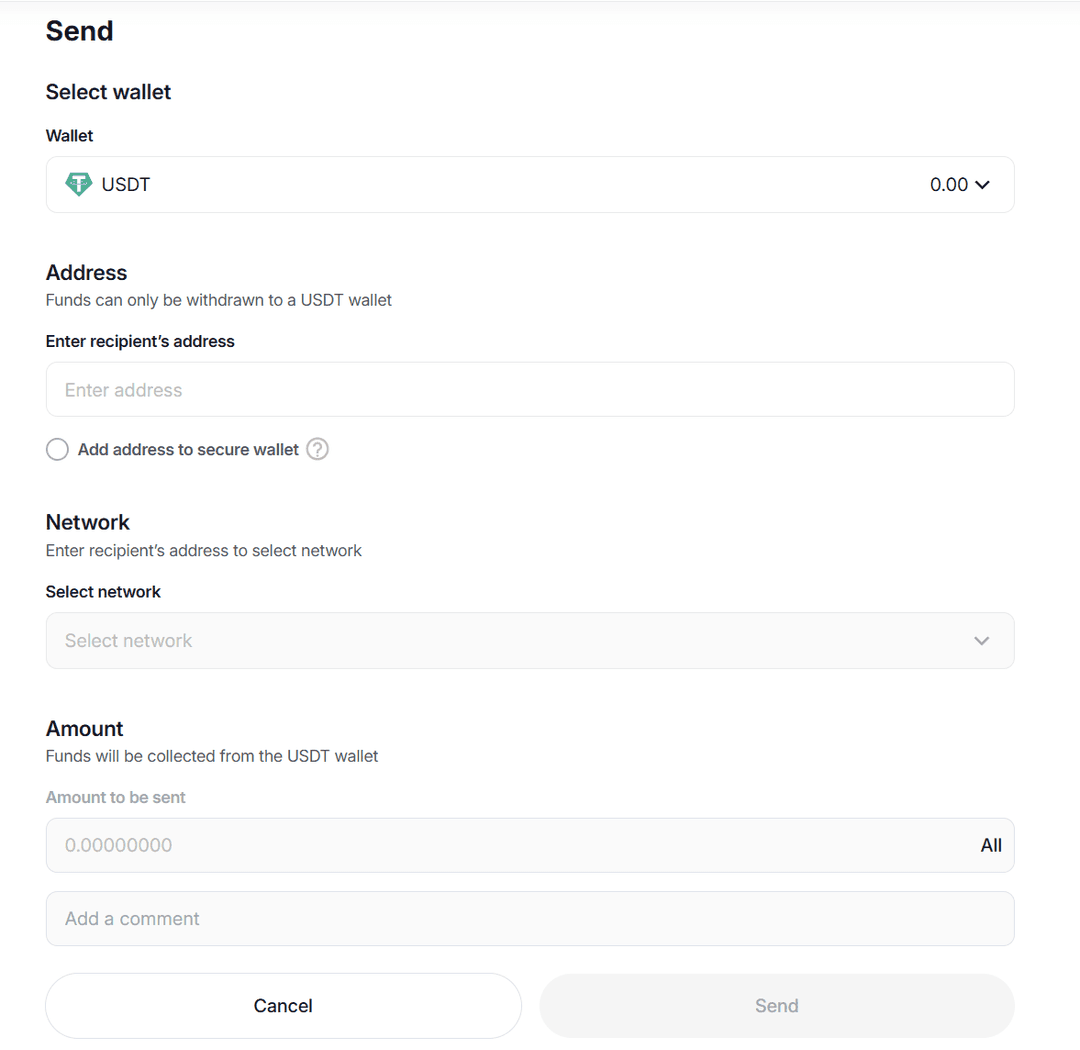
Special attention should be paid to the network selection. Many tokens operate on multiple blockchains simultaneously. USDT, for example, works on Tron, Ethereum, BSC, and other networks. If coins are sent to the wrong blockchain, they cannot be recovered.
Sending Funds and Waiting for Confirmation
The final step is authorization. The buyer enters a PIN, uses a fingerprint scanner, or facial recognition. After that, the transfer is broadcast to the network, where it is processed by miners or validators.
Processing time depends on the blockchain. On the Tron network, this happens almost instantly. Ethereum handles it in a couple of minutes. The Bitcoin network is slower — the wait ranges from ten minutes to an hour. The buyer can track the transaction's progress in their wallet.
Automatic Payment Credit
The processing service continuously monitors the network and records incoming transfers. When the transaction accumulates enough confirmations, the order status changes to "Paid" and the seller receives a notification.
No human is involved in this chain. There's no need to visit a blockchain explorer or cross-reference transaction hashes. Automation handles the routine and eliminates human error.
Why Cryptocurrency Payment by QR Code Is Convenient for Users
Cryptocurrency payment by QR code turns a complex technical process into a familiar action. The user does what they already know how to do — scan a code and confirm the payment.
Minimum steps. Three steps instead of ten. Open the wallet, scan the code, confirm. No need to copy the address, switch between apps, or manually enter the amount. All data is filled in automatically.
Fewer transfer errors. The main fear when working with cryptocurrency is sending funds to the wrong place. Crypto addresses are long and complex. It's easy to make a mistake with manual entry. A QR code eliminates this problem — the data is read by a machine, not entered by a person.
A clear and familiar scenario. People are already used to paying by QR through banking apps. Crypto payment works on the same principle. The user doesn't need to learn anything new. The scenario is familiar — only the source of funds changes.
For those just starting to use cryptocurrency, QR payment removes the barrier to entry. There's no need to understand the details. All you need is a wallet with a balance and a camera on a smartphone.
Why QR Crypto Payments Are Beneficial for Business
Paying with crypto via QR simplifies the acceptance of cryptocurrency payments and reduces operating costs. A business gets an automated system instead of manually processing each transaction.
Simplified crypto payment acceptance. There's no need to explain to clients how to copy an address and send funds. Just show the QR code. The client scans and pays. The process is intuitive even for crypto newcomers.
Fewer erroneous transfers. When a client manually copies an address, they might copy the wrong address, the wrong network, or enter the wrong amount. Each such error means a support request and wasted time. A QR code minimizes these situations.
Automated confirmations. Crypto processing tracks the blockchain and automatically records payments. An order receives a "Paid" status without human involvement. This saves hours of work with high transaction volumes.
Scalability across websites and services. QR codes integrate easily into any interface — a website, a mobile app, or a point of sale. The same principle works for an online store and a physical checkout. A business can scale crypto payment acceptance without changing its processes.
Heleket provides a ready-made infrastructure for accepting crypto payments via QR code. The service automatically generates payment pages with QR codes, tracks blockchain transactions, and notifies about incoming funds. Integration via API or ready-made plugins takes minimal time. You can learn more about the features here.
Security of Cryptocurrency Payment by QR Code
Cryptocurrency transactions are irreversible. An error when sending means losing funds with no possibility of recovery. A QR code reduces risks by automating data entry.
Make sure the payment details are entered correctly. Human error is the main source of problems with crypto payments. A typo in one character of an address makes the transfer impossible or sends funds to nowhere. A QR code is read by a machine with 100% accuracy. If the code is damaged — it simply won't scan, rather than providing incorrect data.
Check that the correct network and amount are specified for the payment. A good crypto processor generates a QR code tied to a specific network. The buyer's wallet sees which network the funds need to be sent to. This prevents situations where USDT is sent via ERC-20 instead of TRC-20, resulting in lost funds.
The amount is also encoded in the code. The buyer cannot accidentally send less or more. If the amount differs from what's indicated in the order, it will be visible on the confirmation screen.
The timer on the payment page provides additional protection. The QR code is valid for about 15–30 minutes. This protects against the use of outdated data and locks in the cryptocurrency exchange rate at the time the invoice is created.
Conclusion
A QR code turns cryptocurrency payment into a simple and familiar action. The buyer scans the code and confirms the payment — exactly as in a banking app. A business gets automated crypto payment acceptance with minimal errors and manual work.
Heleket provides the full cycle of QR crypto payment acceptance — from generating the payment page to automatically crediting funds. Support for popular cryptocurrencies and networks, instant notifications, ready-made integrations for websites and services. Connect and be ready to accept cryptocurrency from new clients.


