
How to Accept Cryptocurrency Payments — A Step-by-Step Guide
#guides
Cryptocurrency has become part of everyday life. Freelancers receive Bitcoin payments from foreign clients. Online stores add USDT as a payment method. SaaS services accept Ethereum from users around the world. If you've been thinking about how to accept cryptocurrency payments for your business or services — this guide will help you figure it out. Let's look at the methods, tools, and step-by-step process for getting set up.
What It Means to Accept Cryptocurrency Payments
How Crypto Payments Work
A crypto payment is a transfer of digital assets from a buyer to a seller via the blockchain. Instead of a bank card, the client uses a crypto wallet. Instead of dollars or euros — Bitcoin, Ethereum, USDT, or another cryptocurrency.
To explain how to accept crypto payment in the simplest possible terms — you give the client an address, they send coins, you receive them. No banks, no intermediaries, no unnecessary restrictions.
How Crypto Payment Differs from a Bank Transfer
Speed. A cryptocurrency transfer is confirmed in minutes. USDT on the Tron network — in seconds. An international bank transfer takes 3–7 business days.
Fees. The crypto payment fee is fixed and doesn't depend on the amount. Sending $100 or $100,000 costs the same. A bank transfer charges a percentage of the amount plus a fixed portion.
Accessibility. Cryptocurrency works for clients from any country. No need to connect local payment systems. No geographic restrictions or blockages.
Irreversibility. A cryptocurrency transaction cannot be reversed after confirmation. This protects against chargebacks, but requires attention when processing refunds.
What Methods Exist for Accepting Cryptocurrency Payments
Direct Transfer to a Crypto Wallet
The simplest method is to create a crypto wallet and publish its address. The client copies the address or scans a QR code and transfers funds directly.
No verification is required to create a wallet. Downloading an app (Trust Wallet, MetaMask, Exodus) or using a hardware wallet for large amounts is sufficient. You receive an address that can be placed on your website or sent to clients.
The advantages are obvious. Fast start without registering anywhere. No service commission — only the network fee. Full control over funds.
The disadvantages are also significant. Manual verification of each payment on the blockchain. One address for all clients — confusion when linking to orders. No automation or notifications. With high volumes this turns into chaos.
Using Crypto Processing
Crypto processing is a service that automates cryptocurrency payment acceptance. The system generates a unique address for each transaction, tracks incoming payments on the blockchain, and sends notifications.
The working principle is as follows. You register with the service and receive integration tools — API, plugins, and payment links. When a payment is made, the system creates a separate address for that specific order. The client sees a QR code, the amount, and a timer. They transfer the funds. The crypto processor records the transaction and sends a webhook notification to your website. The order automatically moves to "Paid" status.
The business advantages are substantial. Automation of the entire cycle. A unique address for each payment — no confusion. Transaction history in the dashboard. Integration with websites and CMS platforms.
Why Crypto Processing Is More Effective Than Direct Acceptance
Once you understand how to receive crypto payment through different methods, it becomes clear — regular operations require automation.
Automation
Crypto processing works around the clock without your involvement. No need to manually check incoming payments on the blockchain, verify amounts, or update order statuses.
The system tracks transactions on its own. Counts network confirmations. Sends a notification when a payment is complete. Your website or CRM receives a signal and automatically responds — grants access, ships goods, activates a subscription.
When working with international clients across different time zones, this is critical. Someone pays at 3 a.m. your time. With crypto processing, that payment is handled automatically.
Convenience for the Client
The client sees a clear payment page. A QR code to scan. An address to copy. The amount in their chosen cryptocurrency. A timer showing how much time is left to pay.
Paying via link and QR code takes seconds. The client scans the code with their wallet, confirms the amount, and sends. No need to manually copy long addresses and risk making a mistake.

A clear interface, like this payment form from Heleket, is especially important for clients who are paying with cryptocurrency for the first time. A complex page discourages and lowers conversion. A simple one helps complete the payment.
Accounting and Scaling
All transactions are saved in the crypto processing dashboard. Full payment history with complete details — date, amount, cryptocurrency, network, status, linked order.
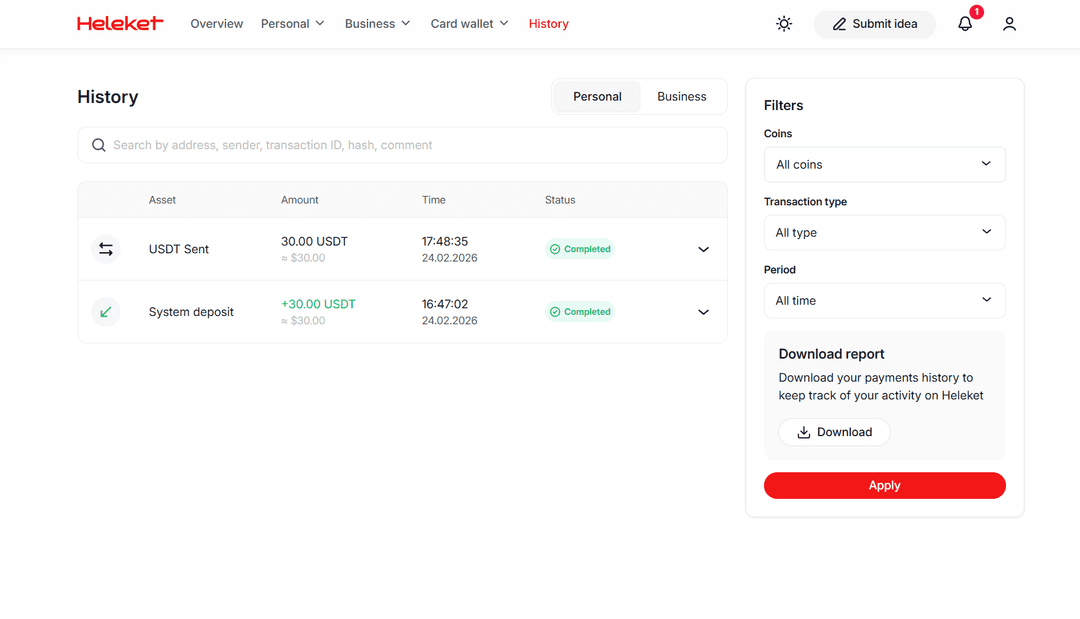
Data export simplifies bookkeeping. Export a report for a period, hand it to an accountant, or load it into an accounting system. No need to manually gather information from blockchain explorers.
As a business grows, crypto processing scales without issues. 10 payments a day or 1,000 — the system handles both the same way. Manual wallet acceptance would be overwhelmed by such growth.
How to Accept Cryptocurrency Payments via Crypto Processing
Step 1. Define the Business Format
One-time payments or subscriptions? Digital goods with instant delivery or physical goods with delayed delivery? This affects the choice of integration tools.
For one-time payments, payment links are sufficient. Create a link in the dashboard, send it to the client. They follow it, pay, and you receive a notification.
For an online store, website integration is needed. A CMS plugin or API connection. Cryptocurrency appears as a payment method at checkout alongside cards.
For subscriptions and recurring payments, more complex logic is required. Not all crypto processors support automatic charges — clarify this when choosing.
Step 2. Choose a Crypto Processing Service
When choosing, pay attention to several factors.
Supported cryptocurrencies. The minimum is USDT, Bitcoin, and Ethereum. The more options, the more convenient for clients.
Supported networks. USDT exists on Tron, Ethereum, BSC, and other networks. Tron (TRC-20) is cheaper and faster — clients prefer it.
Fees. The market standard is 0.4–1% per transaction. Compare the total cost, including withdrawal and conversion.
Integration. Are there plugins for your CMS? How clear is the API documentation? Is there a test mode?
Heleket meets all these criteria. Support for popular cryptocurrencies and networks, commission from 0.4%, ready-made CMS integrations, and documented API. Learn more at Heleket.
Step 3. Set Up Payment Acceptance
Integration depends on the chosen method.
Payment links are the fastest option. Register with the service, create a link with an amount and description, send it to the client. Works without a website, suitable for freelancers and sales through social media.
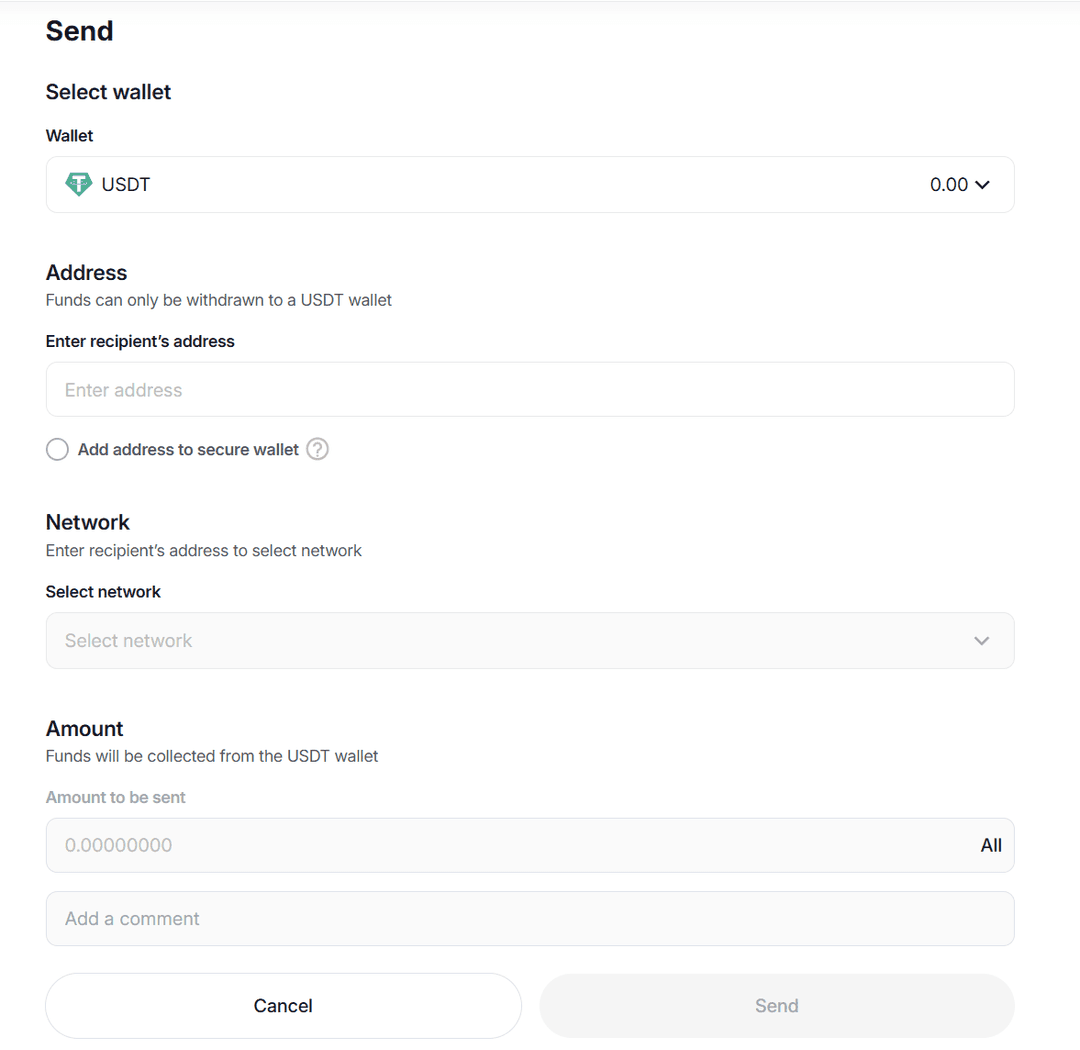
CMS plugin — for online stores on WordPress, OpenCart, and other platforms. Install the plugin, enter API keys from the dashboard, configure the parameters. Cryptocurrency appears at checkout.
Heleket has ready-made plugins for all popular CMS platforms. Setup takes just a few minutes. Instructions for connecting them can be found here.

API integration — for custom solutions. A developer connects the payment gateway following the documentation. Provides maximum flexibility but requires technical skills.
Step 4. Test the Process
A mandatory test before full-scale launch. Don't start accepting payments until you've confirmed everything works.
Run a test payment. Many crypto processors offer a test mode without real transactions. If not — send a minimal amount to yourself.
Check the entire path. Payment went through — notification received — order status updated — access granted. Every step must work correctly.
Ask someone outside to go through the payment process. A fresh pair of eyes will find problems you didn't notice.
Other Things to Keep in Mind
Volatility
Bitcoin and Ethereum can lose 10–15% of their value in a day. If you received payment in BTC and didn't convert — you risk ending up with less than you expected.
Accept stablecoins (USDT, USDC) — their rate is stable. Heleket has an automatic conversion feature to stablecoins immediately upon receipt. Withdraw funds regularly, avoiding an accumulation of volatile assets.
Network Fees
The network fee is paid by the sender — your client. But it affects their willingness to pay.
On the Tron network (TRC-20), the fee is around $1 regardless of the amount. On Ethereum (ERC-20) — from $5 to $50 depending on network load. A significant difference.
Support low-fee networks. Tron for USDT is a must. Clients choose it most often precisely because of the low fees.
Refunds
Cryptocurrency transactions are irreversible. If a client requests a refund — you will need to send funds in a separate transaction.
Write out your refund policy in advance. Explain the process on the website. State that refunds are made in cryptocurrency to the client's wallet.
Conclusion
Accepting cryptocurrency payments is easier than it seems. To get started, all you need is to register with a crypto processor and create your first payment link. To scale — integrate the service with your website via a plugin or API.
Crypto processing is more effective than direct wallet acceptance. Automation saves time. Unique addresses eliminate confusion. Transaction history simplifies accounting. A convenient interface increases conversion.
When choosing a service, look at cryptocurrency and network support, fees, and integration quality. Always test before launch. And remember volatility — stablecoins solve that problem.


